It is easy to do great work when you wake up feeling energetic, well-rested, and inspired. When the coffee is hot, the playlist hits right, and your inbox is calm, sitting down to write, exercise, or tackle tough code feels natural.
Anyone can execute on their best days. Your ultimate trajectory in life, however, is determined entirely by what you do on your worst days.
What happens when you wake up after five hours of interrupted sleep with a dull headache? What happens when a project falls apart at work, your partner is stressed, and the last thing you want to do is practice your evening routine? That is the exact moment where amateurs quit and professionals rely on their infrastructure.
Too many self-improvement influencers dismiss motivation as completely worthless, preaching a toxic gospel of unending grit and suffering. That advice is both scientifically inaccurate and emotionally unsustainable. Motivation is not useless; it is an incredible accelerant. But it is fundamentally fickle.
To build decades-long consistency, you need to stop expecting yourself to feel like doing the work. You need to design an operating system that carries you through the inevitable emotional downturns.
The Biological Reality of Motivation
Motivation is mediated primarily by dopamine and neuroendocrine signaling. It fluctuates based on blood glucose levels, circadian rhythm, cortisol, sleep architecture, and recent social interactions. Expecting your emotional motivation to remain flat and elevated every single day is as biologically absurd as expecting the outdoor temperature to remain 72°F year-round.
When motivation disappears, you have not suffered a moral failing. You are simply experiencing normal human biology.
The fatal mistake is believing that physical action must be preceded by emotional inspiration. In reality, the causality flows in both directions: action creates emotional momentum just as often as emotion creates action.
Motivation vs. Pre-Committed Systems
The difference between an amateur and a professional comes down to a single distinction in cognitive framing:
The Cognitive Contrast
'I need to feel energized and inspired before I sit down to work on my creative project.'
'I already decided last Sunday that Tuesdays at 7:00 PM are dedicated to writing. Mood is not part of the equation.'
The Power of Minimum Habit Baselines
When people hit a wall of exhaustion, they usually operate in all-or-nothing extremes. They believe their only two choices are performing a 100% workout or doing absolutely nothing.
The antidote to this trap is the 'Minimum Viable Habit'—an emergency floor version of your routine designed specifically for days when life has gone off the rails.
Standard Target vs. Minimum Baseline
Every core habit in your life should have an explicitly defined minimum version:
- Gym Habit: Standard = 60 minutes of heavy lifting. Emergency Baseline = 10 pushups and 10 air squats beside your bed.
- Writing Habit: Standard = 1,000 words. Emergency Baseline = 1 single paragraph or 100 words of notes.
- Reading Habit: Standard = 30 minutes of deep study. Emergency Baseline = 1 single page before sleep.
- Meditation Habit: Standard = 20 minutes of sitting meditation. Emergency Baseline = 3 slow conscious breaths before brushing your teeth.
Eliminating Mid-Day Decision Fatigue
Every decision you make between waking and sleeping drains a fraction of your prefrontal cortex's executive control reserves. Choosing what to wear, which email to answer first, what to eat for lunch, and whether to take a phone call all erode your cognitive battery.
If your critical habits are left unscheduled—floating somewhere in the late evening—they arrive at the exact moment when your decision-making capacity is at absolute zero.
To safeguard consistency, schedule your most vulnerable habits for protected windows, or establish airtight 'If-Then' implementation intentions that trigger automatically without debate.
What to Do When You Miss a Day (The Reset Protocol)
Eventually, you will miss a day. A delayed flight, a sudden fever, an unexpected family emergency, or pure unadulterated human exhaustion will break your streak.
When this happens, the most dangerous enemy is not the missed day itself. It is the psychological phenomenon psychologists call the 'What-the-Hell Effect' (the counter-regulatory eating and behavioral collapse that follows a minor slip). People think: 'Well, my 30-day streak is ruined. I blew it. Might as well take the rest of the week off and eat junk food.'
A single missed day is an anomaly; two missed days is the birth of a new, destructive habit. When you drop a repetition, follow this exact three-step reset protocol:
Execute a Zero-Judgment Post-Mortem
Treat the miss like an aircraft engineer investigating a mechanical anomaly. Strip all shame and moral self-flagellation from your analysis. Ask: What specific friction point triggered the miss? Was the habit scheduled too late? Was the cue ambiguous? Adjust the system, don't insult yourself.
Enforce the 'Never Miss Twice' Ironclad Rule
Make an unbreakable contract with yourself: under no circumstances are you permitted to miss two consecutive days. If you missed yesterday due to travel, today's minimum baseline must be completed even if it happens in an airport terminal or hotel lobby.
Recalibrate Activation Friction for 48 Hours
For the next two days, lower the required volume to your emergency baseline. Focus 100% of your mental energy on re-establishing the initiation sequence rather than hitting personal records.
Structured Daily Briefings and Resilient Streak Mechanics
In Ascend, consistency is protected through two complementary pillars: the Daily Briefing and intuitive Streak Mechanics.
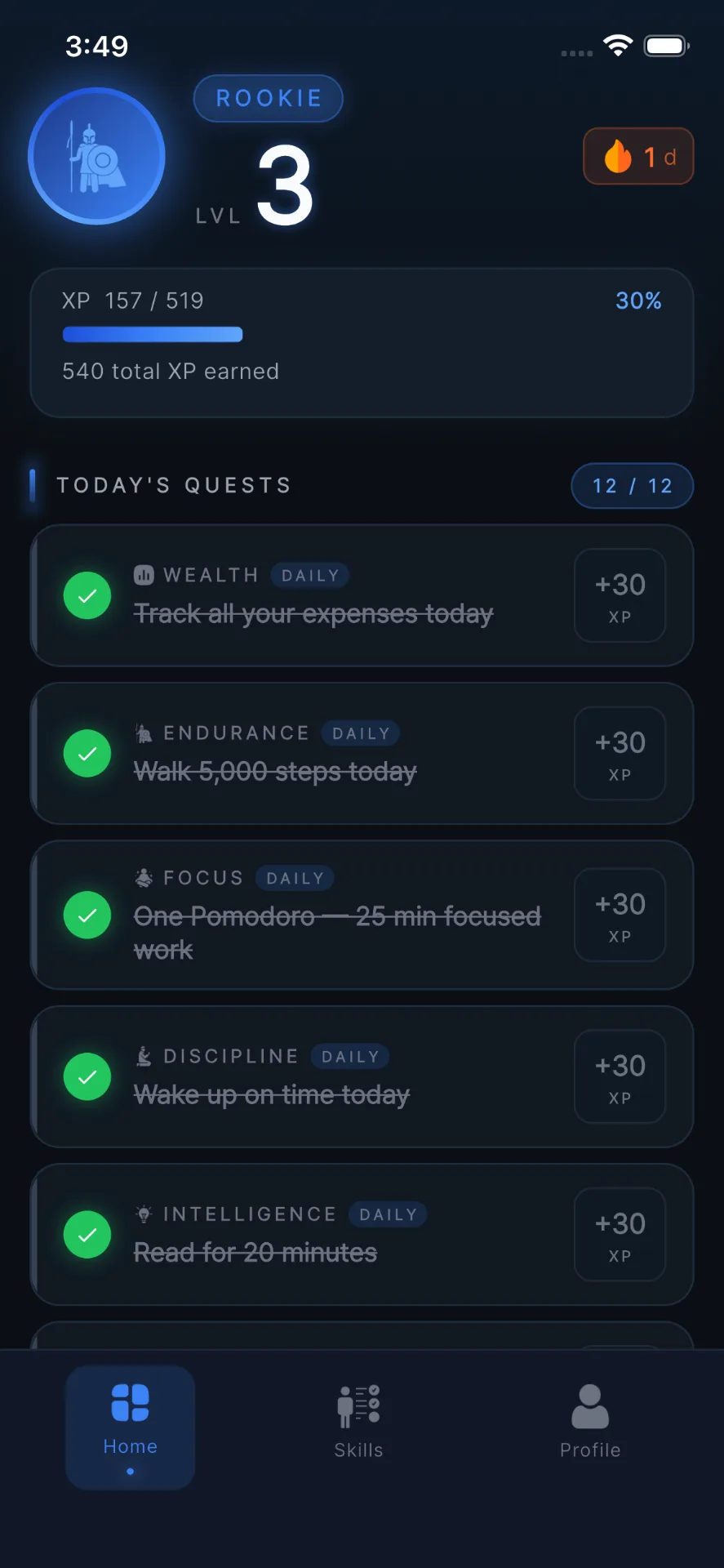
Every morning, your Daily Briefing lays out your active quests, high-priority objectives, and current streak status before you even touch an email or social app. It removes all ambiguity about what needs to happen today.
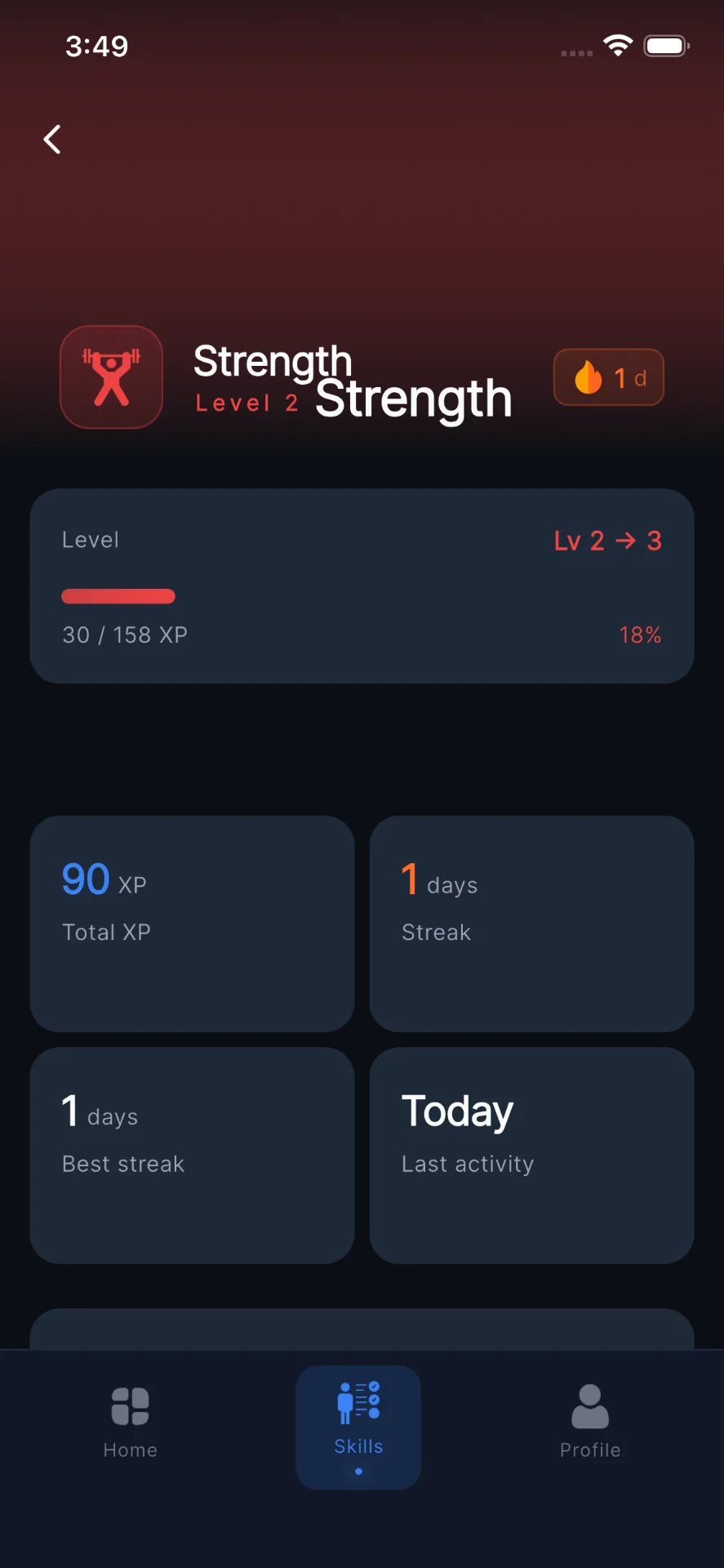
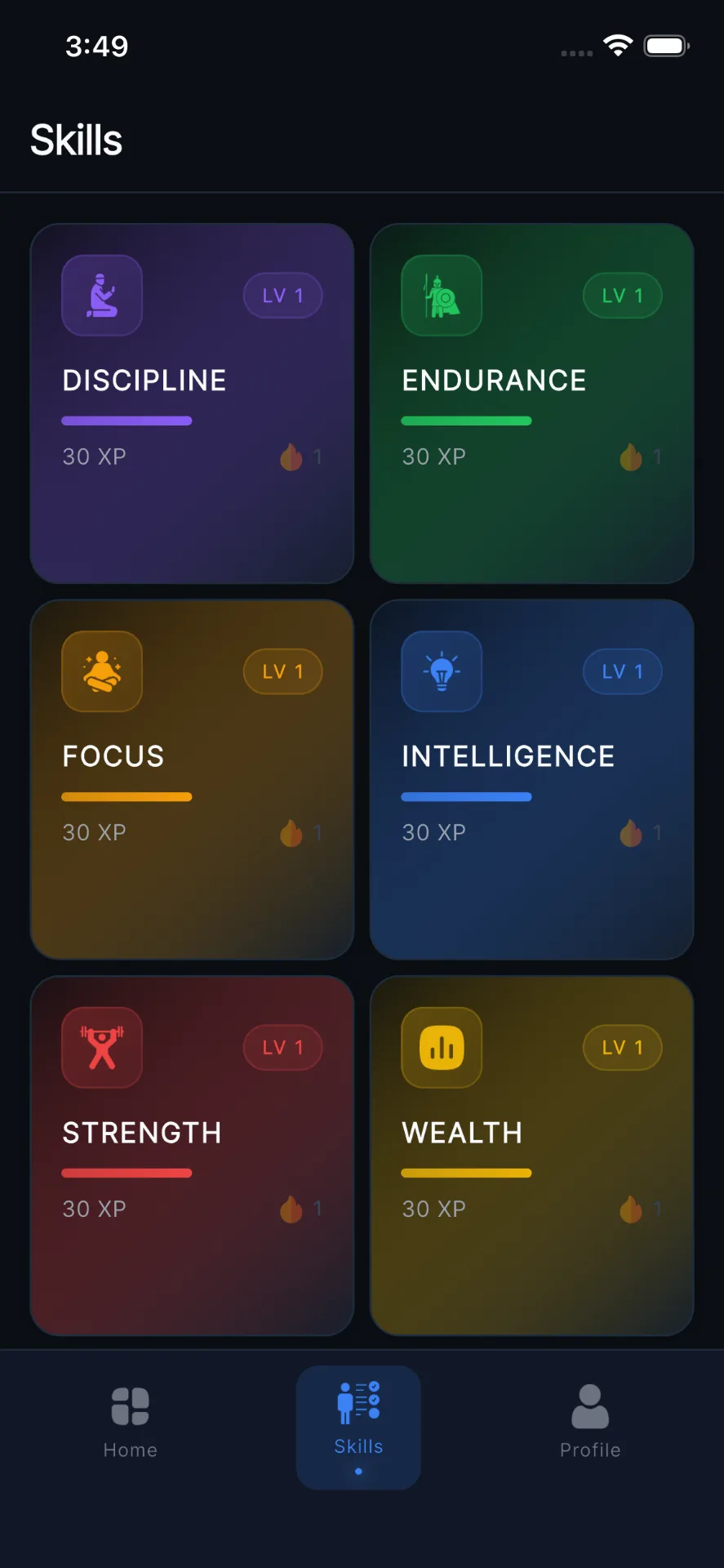
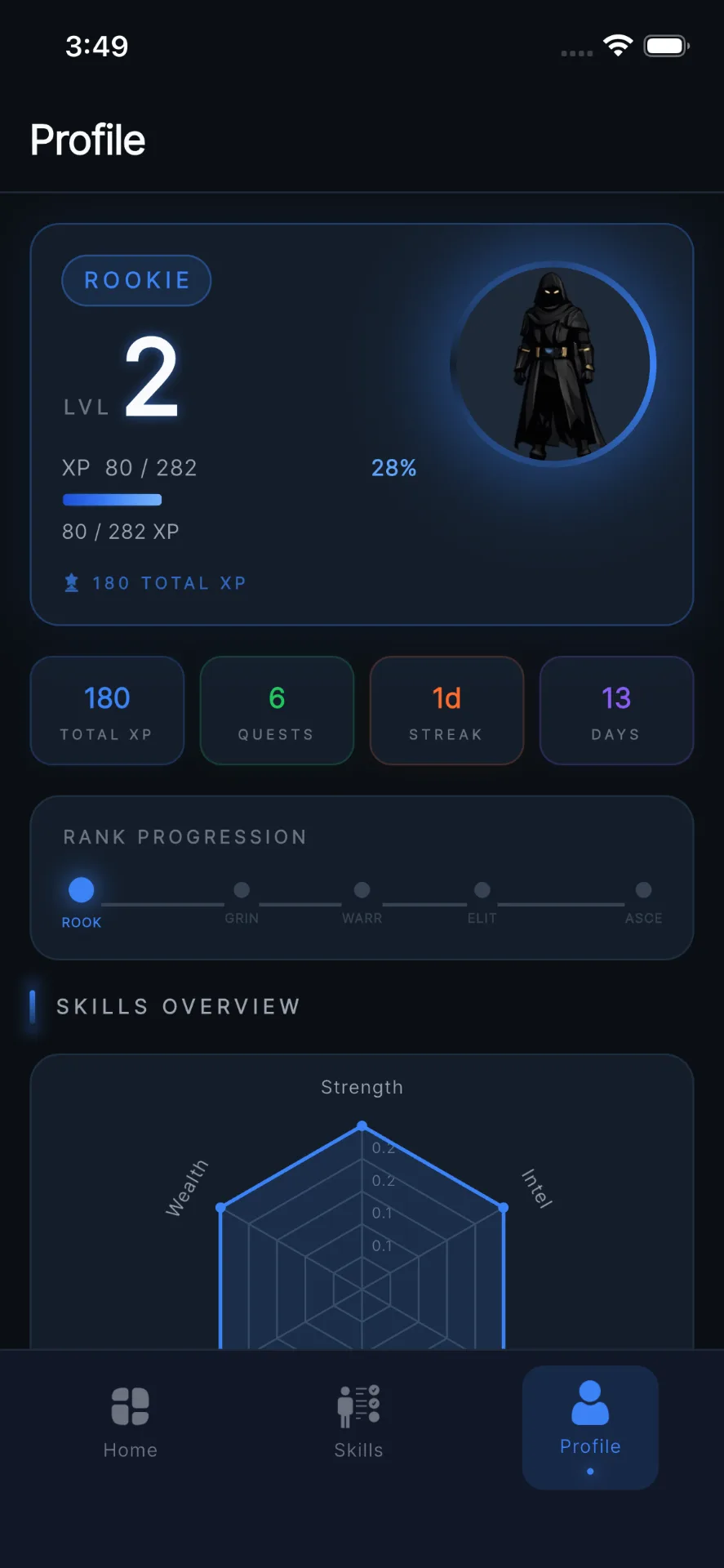
When life hits hard, Ascend recognizes that streaks should inspire discipline, not induce crippling anxiety. You see your active streak count alongside your overall class level and radar profile—reinforcing that even if a day is turbulent, your lifetime XP and character level remain permanently intact.
Final Thoughts
Consistency is not an emotional state. It is an engineering choice.
Expect motivation to fade. Greet its departure not with panic, but with the cool confidence of someone whose daily habits are anchored to ironclad triggers and emergency baselines.
When you stop needing to feel inspired and start relying on a visible progression system, you become genuinely unstoppable.
Build your character one quest at a time.
Stop letting fluctuating motivation derail your potential. Ascend gives you the structure, daily briefing, and streak tracking you need to stay on course.